


Gender Equality in Academia and Research - GEAR - 101129408
Capacity building in the field of higher education (ERASMUS-EDU-2023-CBHE)
Project duration: 2023-2026.
Partners
| Montenegro | CEO | University Adriatic, Faculty of Management Herceg Novi |
| Lithuania | BEN | Vilnius University |
| Slovenia | BEN | University of Maribor |
| Montenegro | BEN | University of Montenegro |
| Bosnia and Herzegovina | BEN | NUBL |
| Bosnia and Herzegovina | BEN | University in Tuzla |
| Bosnia and Herzegovina | BEN | Association of young women GirlThing Tuzla |
| Montenegro | BEN | Socio-Economic Center of Montenegro |
| Serbia | BEN | Western Balkans Institute |
| Serbia | BEN | University of Singidunum |
General objective
GEAR is developed to support addressing the pressing regional society's issues stemming from gender inequality in education, science and work and in line with recent developments corresponding to the fourth industrial revolution and regional economic development. Additionally, the project provides venues for inclusive action of HE underrepresented women, ie Roma, especially in the aftermath of the COVID19 educational equality and accessibility crises. Hence, the action addresses both quality and relevance of HE in beneficiary communities and countries.
The action contributes to the overarching priority of the European Commission for the Western Balkans: Sustainable growth and jobs: Quality education is a key factor for securing growth and jobs and for addressing challenges linked to unemployment and skills mismatches. Investing in human capital and entrepreneurship helps societies to prepare for the future, by putting a stop to brain drain and supporting the transition to a knowledge-based economy.
A key objective is to tackle the existing mismatch between education outcomes and labor market demands, including through the development of work-based learning. Inclusive participation of all citizens, including Roma, in education and training systems will ensure that no one is left behind.
Specific objectives
Given all the raised issues, GEAR promises to deliver the following 4 specific objectives:
- SO1: to develop and implement gender equality plans at 4 WB HEIs
- SO2: to support gender balance in WB HEI with strengthening women's and girls' participation in STE(A)M studies and careers
- SO3: to foster support (networks) for women with fewer opportunities in HE
- SO4: to support the implementation of national and local gender aspects in strategic developmental frameworks (mainstreaming)
The GEAR project brings recommendations for systemic improvement of gender equality in STE(A)M education and research
The Faculty of Management in Herceg Novi continues to contribute to the promotion of inclusive, quality and sustainable higher education through the activities of the Erasmus+ project GEAR - Gender Equality in Academia and Research.
As part of the project, the Policy Brief for Montenegro was published , a document that provides recommendations for the improvement of gender equality in the fields of science, technology, engineering, art and mathematics (STE(A)M). The document is based on the results of the GEAR Gender Gap analysis and the experiences of partner institutions from the Western Balkan region.
The Policy Brief indicates that gender equality is an important prerequisite for the development of human capital, innovation and competitiveness of society. At the same time, challenges were identified such as the lack of gender-disaggregated statistical data, horizontal and vertical segregation in STE(A)M disciplines, as well as insufficiently developed institutional mechanisms for managing gender equality.
Key recommendations include:
- introducing mandatory gender indicators into higher education accreditation systems;
- connecting public funding with results in the field of gender equality;
- establishment of mandatory gender equality plans (GEP/GAP) for universities and research institutions;
- development of the national system of gender-disaggregated statistics in higher education and research.
The GEAR project brings together universities and organizations from Montenegro, Bosnia and Herzegovina, Serbia, Slovenia and Lithuania, with the aim of strengthening institutional capacities for the promotion of gender equality in the academic and research environment. The project is financed by the European Union through the Erasmus+ program Capacity Building in Higher Education.
The Faculty of Management Herceg Novi remains committed to creating an inclusive academic environment that provides equal opportunities for all students, researchers and employees, contributing to the development of a fairer and more competitive higher education system in Montenegro.
You can find the entire text HERE.
MOOC Library - Critical Thinking
The Faculty of Management Herceg Novi (Adriatic University), within the Erasmus+ project GEAR - Gender Equality in Academia and Research, provides students and academic staff with access to a MOOC library dedicated to the development of critical thinking.
The materials were developed in cooperation with partner universities and are available through the following links:
MOOC Library - MOOC library
UTZ
Critical Thinking 1: https://tinyurl.com/22nqxf85
Critical Thinking 2: https://tinyurl.com/2yzjgasj
Critical Thinking 3: https://tinyurl.com/2d58ewrc
Critical Thinking 4: https://tinyurl.com/2dkgb2ls
CT Skills for Students Interactive Education Presentation: https://tinyurl.com/2yejxnjr
NUBL
Critical Thinking 1: https://tinyurl.com/23zas9hz
Critical Thinking 2: https://tinyurl.com/2am3zxvj
Critical Thinking 3: https://tinyurl.com/265nnxex
CT Moocs documentation: https://tinyurl.com/26kbosmo
UA
Critical thinking: https://tinyurl.com/23shblcb
Critical thinking: https://tinyurl.com/22urdda8
CT MOOC Documentation: https://tinyurl.com/2bx2jryb
UoM
Critical thinking: https://tinyurl.com/27hv3bv3
These resources are freely available and intended to strengthen students' competencies in the area of critical thinking and analytical approach.
Disclaimer: This material is funded by the European Union. The views and opinions expressed in the material are solely those of the authors and do not necessarily reflect the views of the European Union or the EACEA. Neither the European Union nor the EACEA can be held responsible for the same.

The Faculty of Management participated in the workshops and project meeting of the Erasmus+ project GEAR in Belgrade
As part of the Erasmus+ project GEAR - Gender Equality in Academia and Research, representatives of the Faculty of Management, Herceg Novi participated on October 16 and 17, 2025 in a study visit, workshops and a transnational project meeting held at Singidunum University in Belgrade.
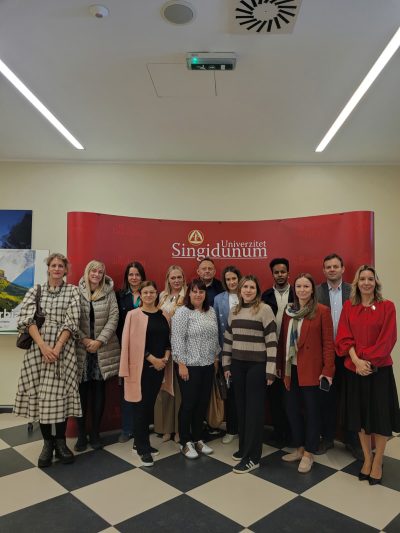
The event was dedicated to the creation of a Manifesto on gender-inclusive STE(A)M education for the universities of the Western Balkans, and included the exchange of good practices, identification of challenges in the field of gender equality and definition of common values that will form the basis of the regional manifesto.
Participants from partner institutions from Montenegro, Serbia, Bosnia and Herzegovina, Slovenia and Lithuania discussed ways to improve institutional policies and practices that contribute to greater participation of women in STEM fields.
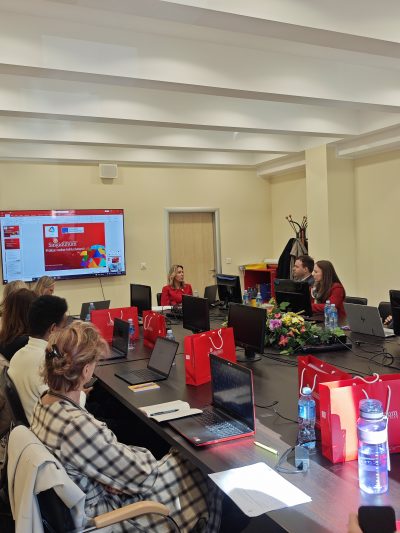
The GEAR project (Grant Agreement No. 101129408) is implemented through the Erasmus+ CBHE (Capacity Building in Higher Education) program, and the coordinator of the project is the Faculty of Management Herceg Novi, University of Adriatic Bar.
Study Visit to the Vilnius University – Erasmus+ Project GEAR
Vilnius University hosted a series of workshops on June 19 and 20 as part of the Erasmus+ project GEAR (Gender Equality in Academia and Research).
The workshops focused on the development of university gender equality and work-life balance toolkits, including instruments for monitoring and evaluation. Special emphasis was also placed on developing tools for critical thinking and empowering gender equality, aimed at (female) lecturers and researchers.
This study visit contributed to the exchange of knowledge and experiences with the goal of promoting gender equality at universities.
Held workshops within the GEAR project at the University of Vilnius.
On June 19 and 20, Vilnius University hosted a series of workshops within the Erasmus+ project GEAR (Gender Equality in Academia and Research).
The workshops held focused on the development of university toolkits for gender equality and work-life balance, with monitoring and evaluation instruments. A special emphasis was placed on the development of tools for critical thinking and strengthening gender equality intended for (female) teachers and researchers.
This study visit contributed to the exchange of knowledge and experiences with the aim of improving gender equality at universities.
Study Visit to the University of Tuzla – Erasmus+ Project GEAR
As part of the Erasmus+ project GEAR (Gender Equality in Academia and Research), consortium representatives participated in a study visit to the University of Tuzla from April 2nd to 4th, 2025. The visit was dedicated to the development of gender-sensitive support systems in higher education institutions, with special emphasis on tracking academic and professional careers, fostering critical thinking, empowering female students, and promoting work-life balance through institutional toolkits. During the three-day event, several key workshops were organized.
On the first day, under the coordination of the University of Maribor, the 3rd Workshop on Introduction of Gender-Sensitive Tracking of Academic Careers of Students and Tracking of Professional Careers of Graduates, the 2nd Workshop on Development of Critical Thinking and Gender Empowerment Toolkit and MOOC for Students, and the 1st Workshop on Development and Implementation of Girls' Business Mentoring Program were held.
On the second day, with the coordination of Vilnius University and strong support from the host University of Tuzla, the 3rd Workshop on Development of Gender Equality and Work-Life Balance University Toolkits with M&E Instruments (including Departmental Frameworks Analysis) and the 3rd Workshop on Development of GEPs/Exchange and Revision of Implementation Outcomes and Issues took place.
The visit concluded with a field visit to the "Girls in Science" club in Tuzla, further reinforcing the consortium's joint commitment to gender equality in education and research.
This study visit represented a significant opportunity for partners to exchange experiences, strengthen collaboration, and build sustainable frameworks for integrating gender equality principles across academic institutions. The knowledge and tools developed during these workshops will play a crucial role in shaping more inclusive, diverse, and supportive environments for future generations of students and researchers.
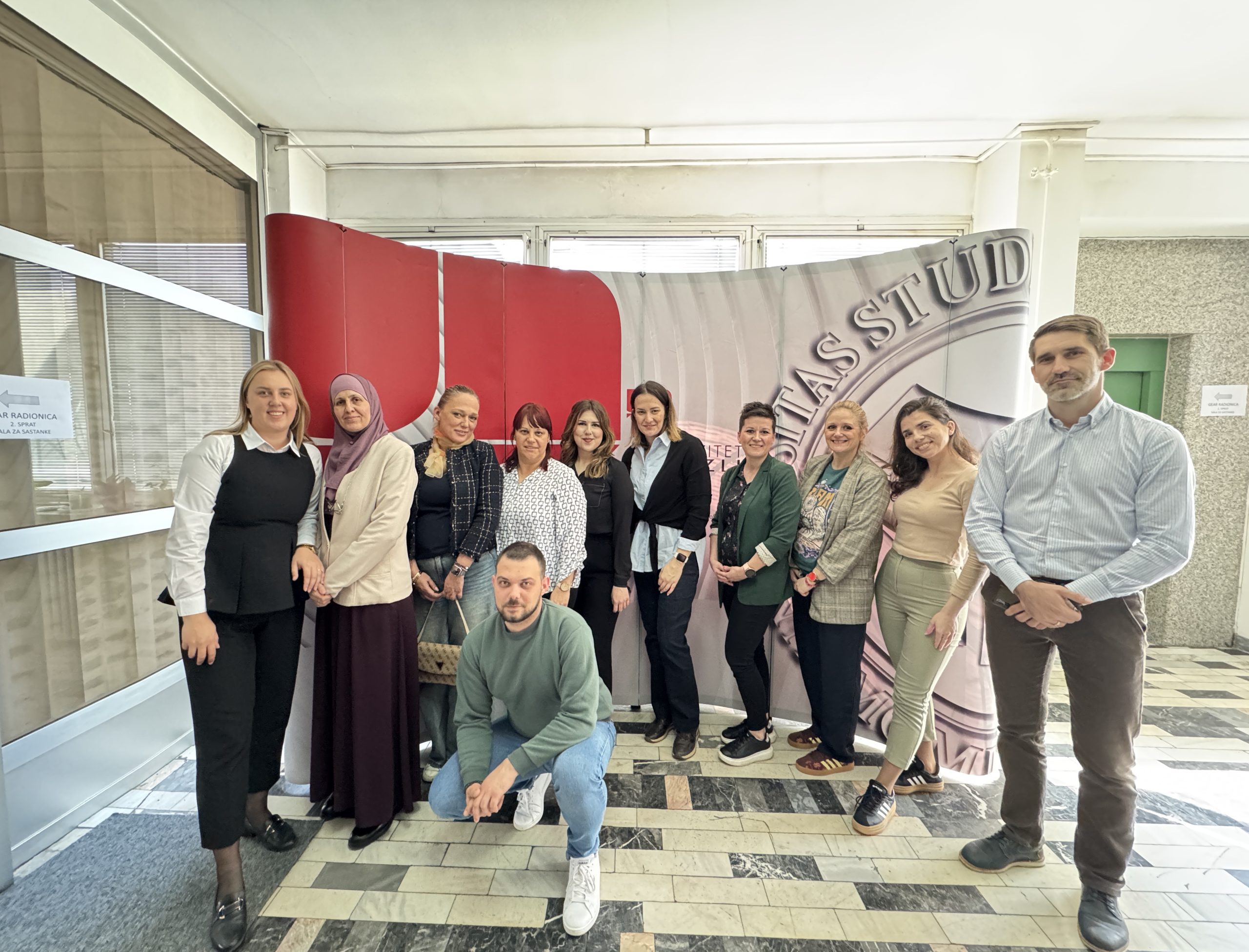
As part of the Erasmus+ project GEAR (Gender equality in academia and research), representatives of the consortium participated in a study visit to the University of Tuzla from April 2 to 4, 2025. The visit was dedicated to the development of gender-sensitive support systems in higher education, with a special focus on following academic and professional careers, strengthening critical thinking, empowering female students and promoting balance between work and private life through institutional tools.
Numerous workshops were organized during the three-day event.
On the first day, under the coordination of the University of Maribor, the Third Workshop on the introduction of gender-sensitive monitoring of the academic careers of students and the professional careers of graduates, the Second Workshop on the development of the Manual for the development of critical thinking and empowerment through a gender perspective and the creation of a MOOC course for students, and the First Workshop on the development and implementation of the Mentorship Program for girls in business were held.
On the second day, under the coordination of the University of Vilnius and with the significant support of the host from the University of Tuzla, the Third Workshop on the development of university tools for gender equality and work-life balance with instruments for measurement and evaluation (including the analysis of departmental frameworks) and the Third Workshop on the development of Gender Equality Plans (GEPs) and the exchange and revision of implementation results were held.
The visit concluded with a tour of the "Girls in Science" Club in Tuzla, further strengthening the joint commitment of the consortium to the promotion of gender equality in education and research.
This study visit was a significant opportunity to exchange experiences, strengthen cooperation and build sustainable frameworks for integrating the principles of gender equality in academic institutions. The knowledge and tools developed during the workshops will play a key role in shaping a more inclusive, diverse and supportive environment for future generations of students and researchers.
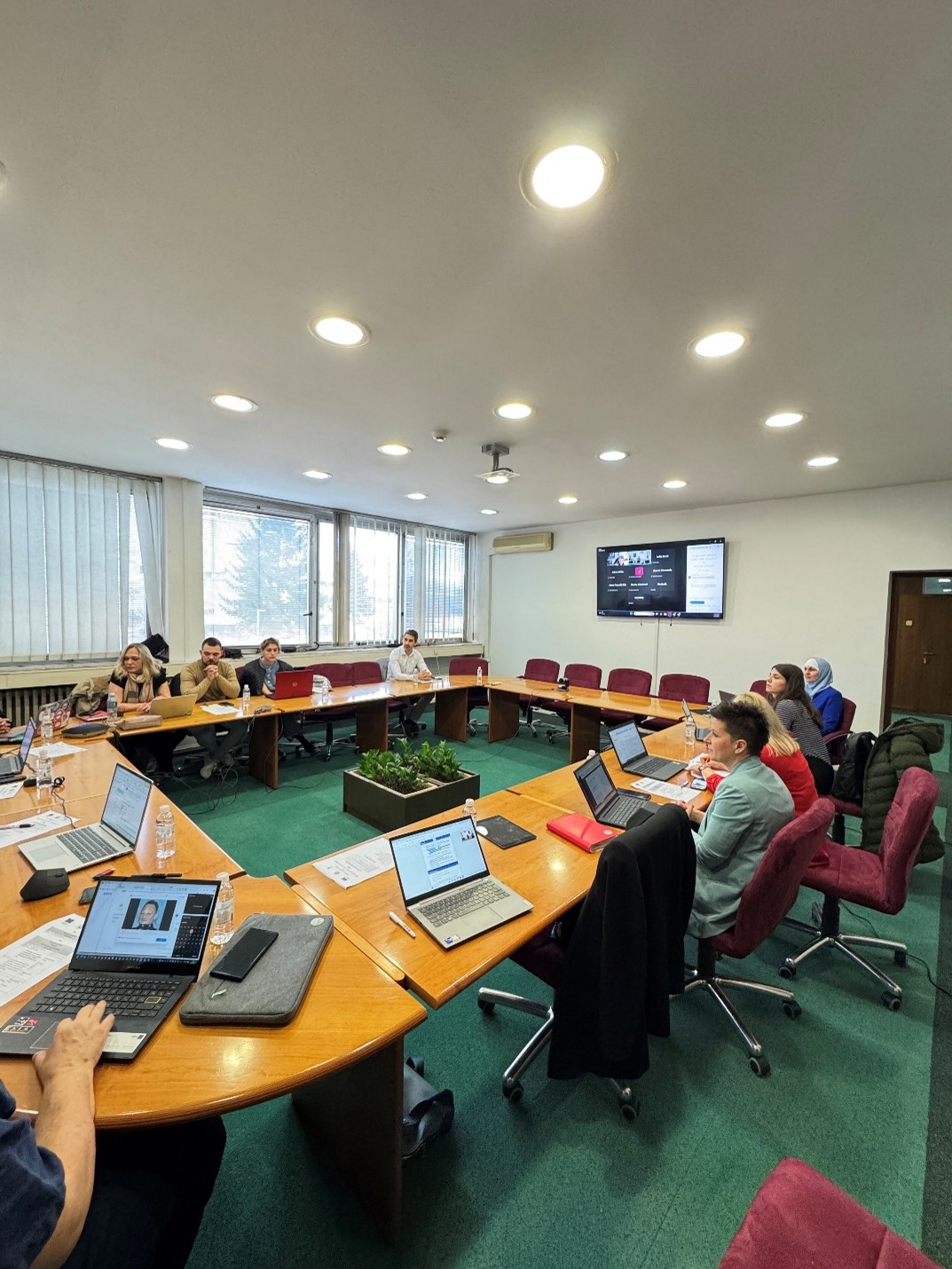
Kick-off meeting held in Montenegro
On Monday and Tuesday, February 26th and 27th 2024, at the Faculty of Management Herceg Novi (University Adriatic Bar), Montenegro, kick-off meeting for Erasmus+ project GEAR: Gender Equality in Academia and Research was held.
Both days of the meeting were working days, with the analysis of the current conditions regarding gender equality, with particular attention paid to science and research, planning of the following activities - meetings and workshops, and organization of work packages and the project itself.
The main objective of the Erasmus+ project GEAR is to support addressing the pressing regional society's issues stemming from gender inequality in education, science and work and in line with recent developments corresponding to the fourth industrial revolution and regional economic development. Additionally, the project provides venues for inclusive action of HE underrepresented women, ie Roma, especially in the aftermath of the COVID19 educational equality and accessibility crises. Hence, the action addresses both quality and relevance of HE in beneficiary communities and countries.
The action contributes to the overarching priority of the European Commission for the Western Balkans: Sustainable growth and jobs: Quality education is a key factor for securing growth and jobs and for addressing challenges linked to unemployment and skills mismatches. Investing in human capital and entrepreneurship helps societies to prepare for the future, by putting a stop to brain drain and supporting the transition to a knowledge-based economy.
Partners in the project, apart from the Faculty of Management Herceg Novi, as a coordinator, are University Vilniaus, Lithuania, University in Maribor, Slovenia, University of Montenegro, NUBL, B&H, University in Tuzla, B&H, University Singidunum, Serbia, as well as organizations GirlThing Tuzla, B&H, Socio-Economic Center of Montenegro, and Western Balkan Institute from Belgrade.
The project will last for three years, and it is expected to be completed by November 30th 2026.
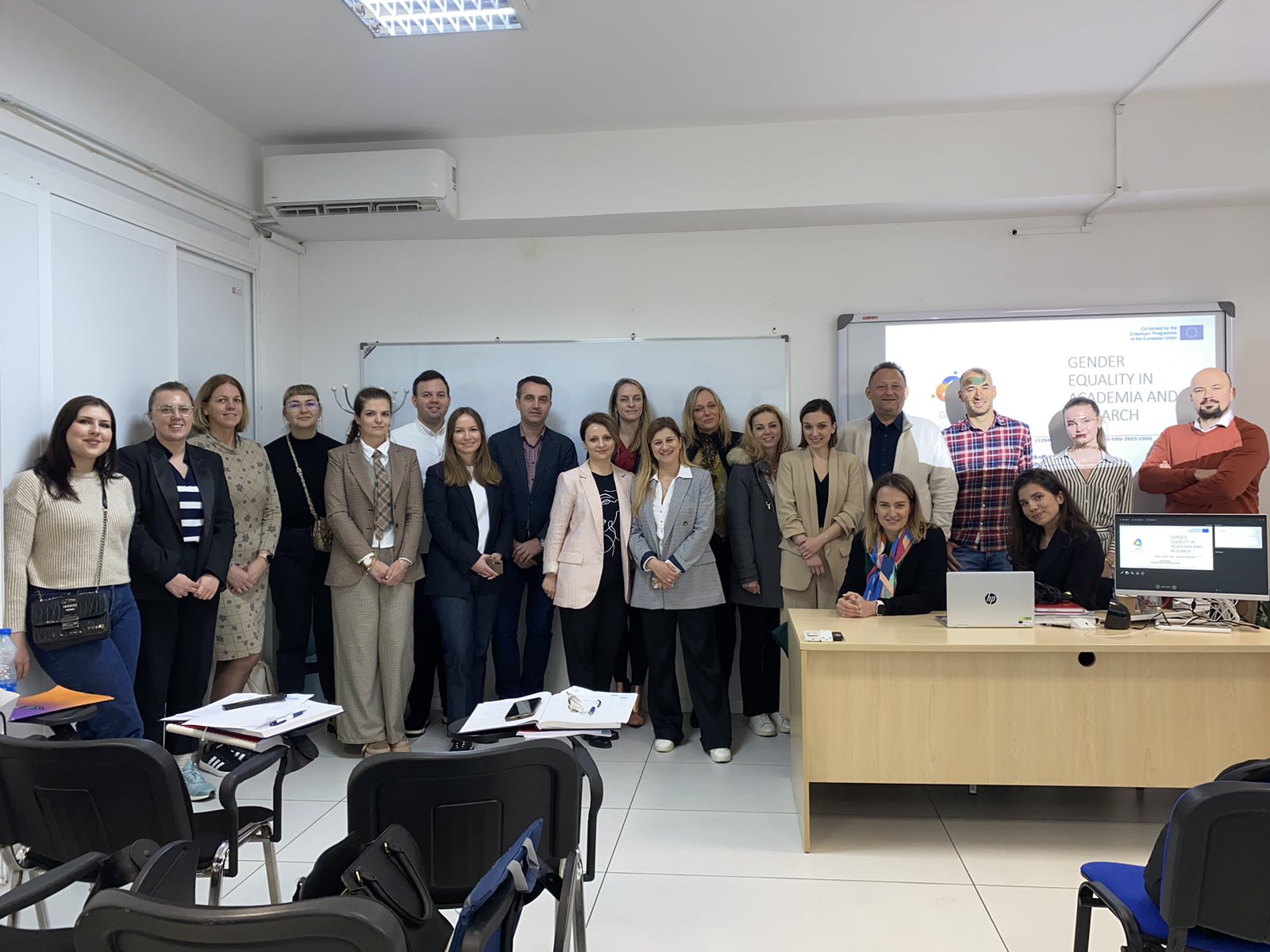
Erasmus+ project GEAR: Held training and student conference at the University of Montenegro
As part of the Erasmus+ project GEAR (Gender Equality in Academia and Research), which deals with gender equality in science and research, on May 10, 2024, in the Sports and Cultural Center of the University of Montenegro (UCG), a training was held on the topic of balance between private life and work, inclusion and skills.
The host of this training is the University of Montenegro, Faculty of Electrical Engineering, while in addition to representatives of this University, the training was attended by professors from the Faculty of Management Herceg Novi, the University of Adriatic Bar, which is also the coordinator of this project, and professors from the Independent University of Banja Luka, the Faculty of Electrical Engineering, University of Tuzla and University of Maribor, as well as representatives of the NGO Socio-Economic Center of Montenegro (Podgorica) and NGO GirlThing (Tuzla).

The professors of Vilnius University from Lithuania, prof. Dr. Aurelija Novelskaitė and Dr. Vilana Pilinkaitė-Sotirovič, with the aim of raising awareness and raising important issues related to the balance between private life and work, especially when it comes to female students and working women, and presenting approaches and ways in which this balance can be achieved and maintained.
The topics covered in the training are, among others, the conceptual framework and practice, forms of imbalance, and the physical, mental and social consequences of imbalance, as well as methods for recognizing it and solving it, along with the methods and tools most useful for achieving balance, and self-empowerment techniques.

As part of the project, two more trainings with the same topic are being prepared, which will be organized for students of these higher education institutions.
On the same day, a conference for students and researchers on gender equality and equal opportunities in education was held.

The conference was accompanied by four workshops for students, held at four higher education institutions: the Faculty of Management Herceg Novi, the University of Adriatic Bar, the University of Montenegro (at the Faculty of Philology, Economics and Maritime Affairs), and the Independent University of Banja Luka and the Faculty of Electrical Engineering at the University of Tuzla.
The aim of these workshops was primarily to involve students in the project, but also to better understand their views, attitudes and experiences regarding gender equality.
At the conference, students' works created after the held workshops and examples of good practice were presented, all with the aim of raising the awareness of both the academic and the general public about gender equality at universities, not only in Montenegro, but also in the Western Balkans, but also involving the general public in the GEAR project.
In the following period, an anthology will be prepared, which will include some of the papers presented at this conference.
Proceedings of the Regional Conference for Students and Young Researchers
The regional conference for students and young researchers was held on May 10, 2024, at the University of Montenegro, in Podgorica, as part of the Erasmus+ GEAR project. This Conference brought together students of different profiles from four different universities from the Western Balkans, who, each in their own way, presented the way they see gender (in)equality in general, but also in institutions of higher education, and gave valuable, mostly positive, examples from practice and finally pointed us in the directions we should move forward when it comes to this important topic.
On that occasion, 15 works of students and young researchers were presented, which are related to gender equality and equal opportunities, primarily in education but also in other segments of life, all with the aim of raising the awareness of both academics and the general public regarding gender perspectives in higher education and further career development.
The Erasmus+ project GEAR - Gender Equality in Academia and Research arose from the need to pay additional attention to STE(A)M areas in higher education in today's increasingly complex and interconnected world. Namely, bearing in mind that the world is in the fourth industrial revolution, the demand for experts and professionals in STEM fields is increasing. The involvement of women in STEM studies, and of those who later pursue those careers, remains at an extremely low level in most countries of the Western Balkans despite the fact that in the period from 2015 to 2018, the percentage of women in tertiary education was as high as 56% in the region, according to the RCC study. Only North Macedonia and Serbia have a slightly higher level of female students in natural sciences, mathematics and statistics, surpassing the other countries of the Western Balkans.
You can download the proceedings here.
